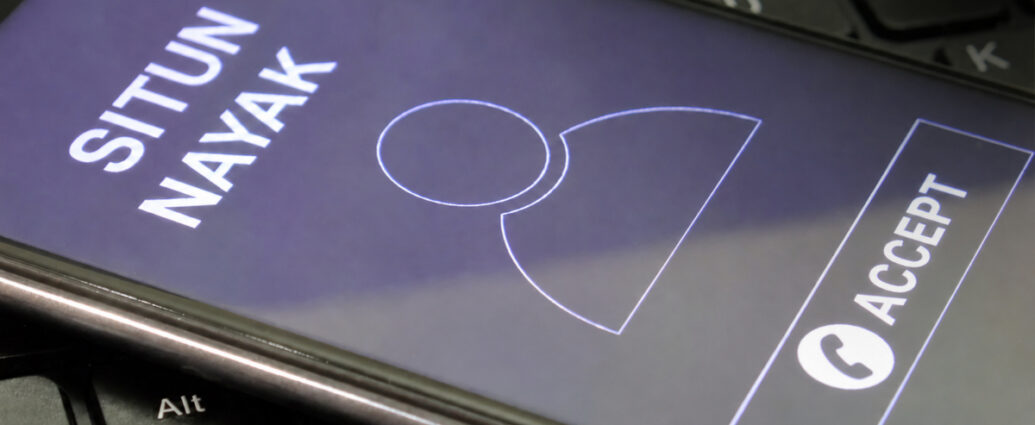
New Delhi [India], October 31: From Sunday, mobile users in India will begin seeing the name of an incoming caller alongside the phone number, as telecom operators switch on the government-mandated Calling Name Presentation (CNAP) service on 4G and 5G networks. The Department of Telecommunications (DoT) has directed all access-service providers to implement CNAP across every service area from November 1.
The change applies automatically to eligible users, who will not need to submit a separate request or install a third-party caller-identification app. The DoT order, issued through a circular dated October 13, covers operators including Reliance Jio, Bharti Airtel, Vodafone Idea and state-owned BSNL.
What users will see
Under the new system, an incoming call will continue to show the caller’s number, but the screen will also carry a second field with the caller’s name. For a domestic call from a number that is not saved in the recipient’s contacts, the displayed name will be the one recorded in the originating operator’s subscriber database—typically the name provided during Know Your Customer (KYC) verification.
If the number is already saved in the recipient’s phone, the saved contact name will take priority. Calls originating outside India will be shown only as “International Call,” rather than displaying a caller’s name.
The service is designed to give users a clearer indication of who is calling before they answer. It is being introduced amid persistent concerns over unsolicited calls, impersonation and digital-fraud attempts, though the DoT circular does not claim that CNAP will eliminate such calls.
Which networks are covered
The initial rollout covers wireless networks using 4G and higher-generation technologies, including 5G. The DoT said implementation on 2G and 3G networks, as well as landline services, will be considered separately after further examination.
That means users on older mobile networks or fixed-line connections may not receive caller-name display in the first phase. The department has not announced a date for extending CNAP to those networks.
Businesses and bulk connections
The order allows operators to offer business and bulk-connection customers the option of displaying a “preferred name” instead of the name recorded in the subscriber database. For new connections, that preferred name must be recorded in the customer application form and subscriber data record, supported by the required documents.
This provision is intended to let legitimate enterprises display a recognisable business identity. The circular does not, however, create a public directory of all business names or specify how consumers can verify every displayed business name.
Privacy safeguards
The DoT has framed the rollout around a “security-by-design” approach. According to the order, users who have activated Calling Line Identification Restriction (CLIR)—a service that restricts disclosure of the caller’s number—will not have their names displayed through CNAP.
The circular also directs that name lookups should not retain the caller’s identity after the call ends. It does not state whether individual subscribers can switch CNAP off entirely, leaving open a question about user control over the default display of KYC-linked names.
A long-running rollout
CNAP has been under consideration for several years. The Telecom Regulatory Authority of India (TRAI) issued recommendations on the feature in February 2024, after which the DoT and telecom operators worked on implementation. Trials were conducted by Airtel, Jio and Vodafone Idea on 4G and higher-generation wireless networks.
The November 1 deadline follows earlier delays in nationwide deployment. The DoT’s latest circular now sets a uniform date for operators to provide the service across their licensed service areas, rather than leaving adoption to individual networks or user requests.
What remains unclear
The biggest practical uncertainty is consistency. While the DoT has mandated the service, the name shown will depend on the accuracy of the originating operator’s subscriber records and on whether the caller’s number is saved by the recipient. A SIM registered to one person may still be used by another, meaning the displayed KYC name may not always identify the person actually placing the call.
For now, the government’s position is clear: from November 1, an unsaved domestic call on a 4G or 5G network should arrive with both a number and a name. Whether that makes unwanted calls easier to screen—and how users respond to the privacy trade-off—will become clearer once the service is live.
Frequently Asked Questions
What is CNAP?
CNAP stands for Calling Name Presentation. It is a telecom-network service that shows the caller’s registered name alongside the phone number on an incoming call.
From when will CNAP be available?
The Department of Telecommunications has directed operators to implement CNAP across all service areas from November 1. The rollout initially applies to 4G and higher-generation wireless networks, including 5G.
Do I need to activate CNAP or install an app?
No. CNAP is intended to work automatically for eligible users on supported networks; no separate request or third-party caller-ID app is required.
What will I see when I receive a call?
Your screen will continue to show the caller’s number, along with a name. If the number is saved in your contacts, the name stored in your phone will take priority.
What name will appear for an unsaved domestic number?
For an unsaved domestic call, the name recorded in the originating operator’s subscriber database—generally the KYC name—will be displayed.
What happens for international calls?
If an international number is not saved in your contacts, the screen will display “International Call” rather than a caller’s name.
Which operators are covered?
The DoT direction applies to access-service providers across their licensed service areas, including Reliance Jio, Bharti Airtel, Vodafone Idea and BSNL.
Will CNAP work on 2G, 3G or landline connections?
Not in the initial phase. The DoT has said implementation for 2G, 3G and landline services will be considered separately after further examination.
Can businesses display a different name?
Yes. Business and bulk-connection customers may be offered the option to display a “preferred name,” subject to verification and recording in the operator’s subscriber records.
Can I stop my name from being displayed?
Callers who have activated Calling Line Identification Restriction (CLIR) will not have their names displayed through CNAP. The circular does not specify a general opt-out for all subscribers.
Will the caller’s name be stored after the call?
No. The DoT’s security-by-design requirement says the name-lookup mechanism should not retain the calling-name identity once the incoming call ends.
Does CNAP guarantee that the displayed name is the actual caller?
No. The name is based on the SIM’s registered subscriber record, so it may not always identify the person physically placing the call. Its accuracy also depends on the originating operator’s records.
Will CNAP stop spam or fraudulent calls?
CNAP is designed to help users identify callers before answering, but the DoT circular does not claim that it will eliminate unsolicited, impersonation or fraud calls.